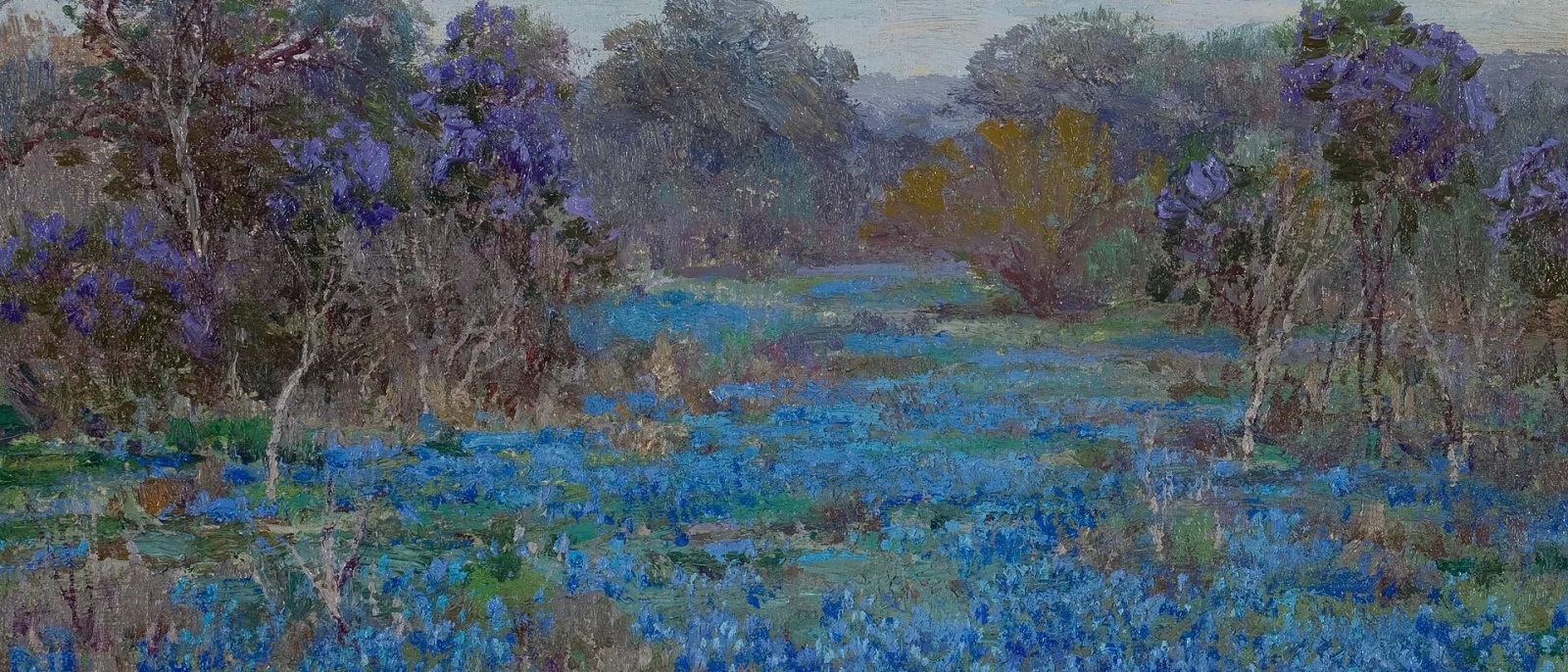
A Region People Reduce
to Three Weeks of Bluebonnets.
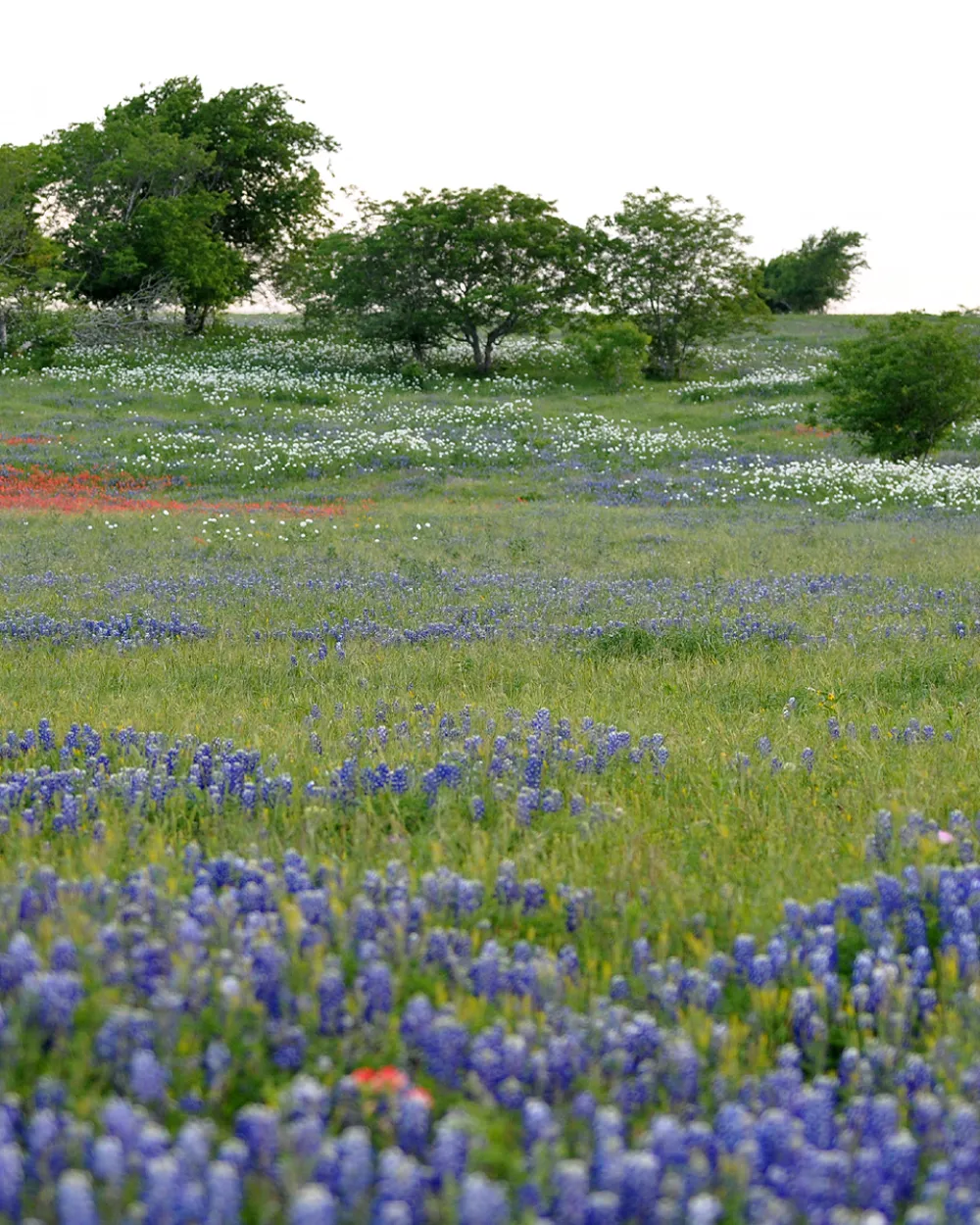
The Texas Hill Country is one of the most recognizable landscapes in the state — spring-fed swimming holes, German Main Streets, fifty wineries between the live oaks, honky-tonk Saturdays. But in travelers' heads it collapses into a single image: bluebonnets, for about three weeks in spring, and maybe a day in Fredericksburg.
The marketing problem wasn't awareness — it was range. Eight towns and natural wonders, four genuinely different seasons, and a dozen ways to spend a weekend, all flattened into one postcard. And the easy fix — a generic "Texas" template of lone stars, lariats, and longhorns — would have buried what actually makes the place feel like itself.
Underneath the brand sat a harder, quieter problem: content sprawl. A real DMO has to keep destinations, experiences, itineraries, events, and an editorial journal current — across seasons, with a small team and no appetite for fighting a page builder. The site had to look unmistakable and be effortless to run.
Brand From the Land.
Built to Be Run.
Land-Derived Brand System
Every color and mark is pulled from the actual landscape — bluebonnet ink, pink-granite rose, spring-fed teal, Indian-paintbrush vermilion. A vintage-Western slab wordmark, topographic contour lines, a hand-built destination seal, and map coordinates on every card. Nothing borrowed from a template.
Component-Driven Content Engine
Every page is assembled from a small set of shared components fed by a typed content model — destinations, experiences, itineraries, journal, events, seasons. The brand lives in one place, so a small team publishes new content without touching layout, and nothing can drift out of style.
Seasonal Storytelling
"Every season, a reason." Spring bluebonnets, summer cold water, fall harvest and golden light, winter long views — the site frames the whole calendar instead of one wildflower window, surfacing the right activities, events, and imagery the moment a traveler arrives.
Built for Discovery — SEO & AI
Static Astro that ships almost no JavaScript, with Schema.org JSON-LD (TouristDestination, TouristTrip, Article, FAQ), a generated sitemap, an RSS feed, and an llms.txt guide for AI crawlers. Fast for people, legible to search engines, and readable by the assistants planning trips now.
Eight Towns & Wonders, One Map
Each destination gets its own hub — German Main Streets, billion-year-old granite, and the bluest water in Texas — all cross-linked by experience, itinerary, and season.
German Main Street, the US-290 wine road, and Sunday houses — the Hill Country's walkable basecamp.
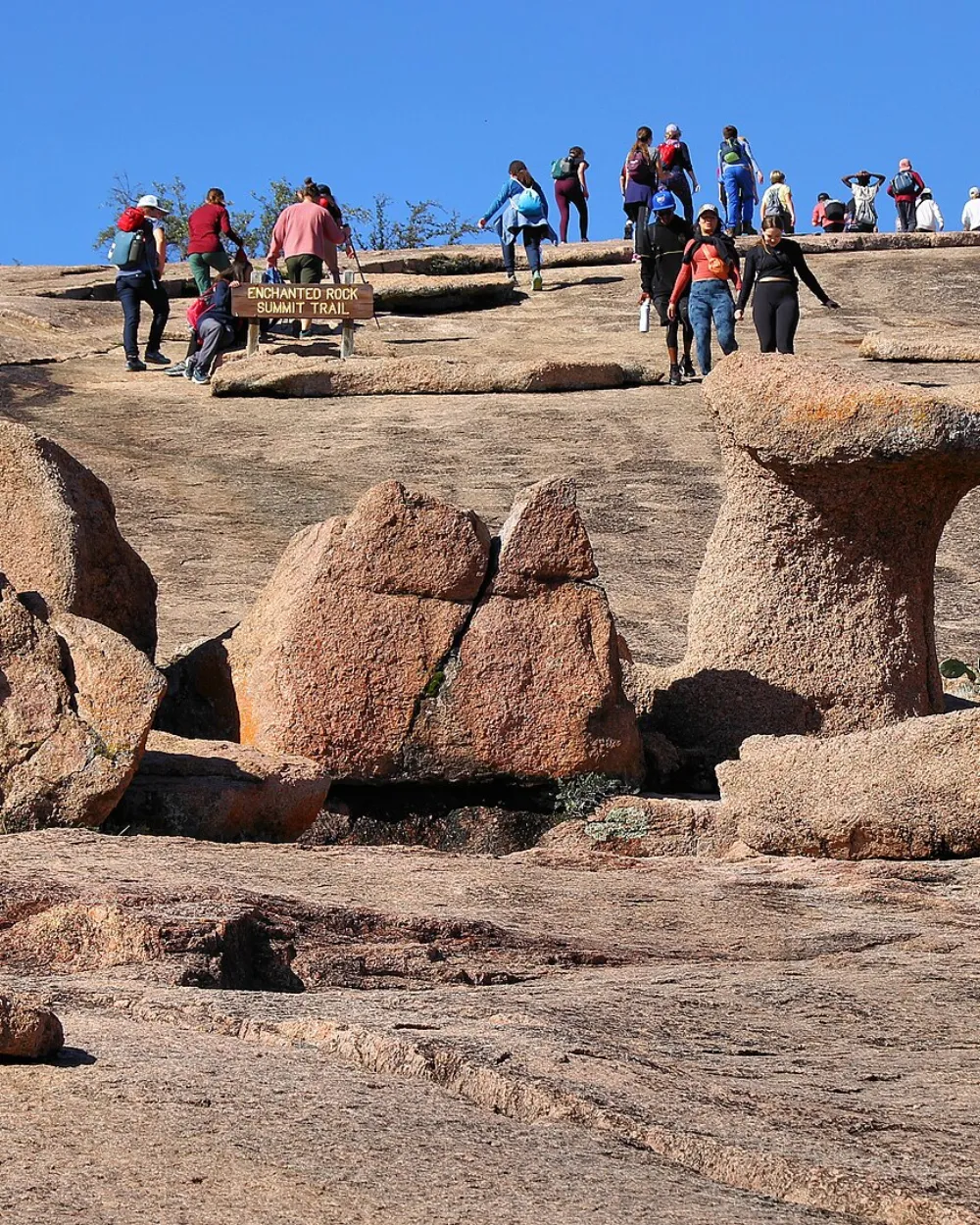
A pink-granite dome rising about 425 feet off the plain — billion-year-old rock and a summit you climb for the view.
Jacob's Well and Blue Hole — artesian springs and shaded swimming on Cypress Creek.
Home of Gruene Hall, dancing since 1878 — Texas's oldest dance hall, on the bank of the Guadalupe.
The "Cowboy Capital of the World" — dude ranches, honky-tonks, and the Medina River.
Gateway to the Highland Lakes — granite, water sports, and the Bluebonnet Cafe's famous pie.
The LBJ Ranch, a certified Dark Sky community, and one of the best small-town light displays in Texas.
A collapsed grotto and jade-green swimming hole below a limestone overhang — reservation-only, and worth it.
Tech Stack
In Action
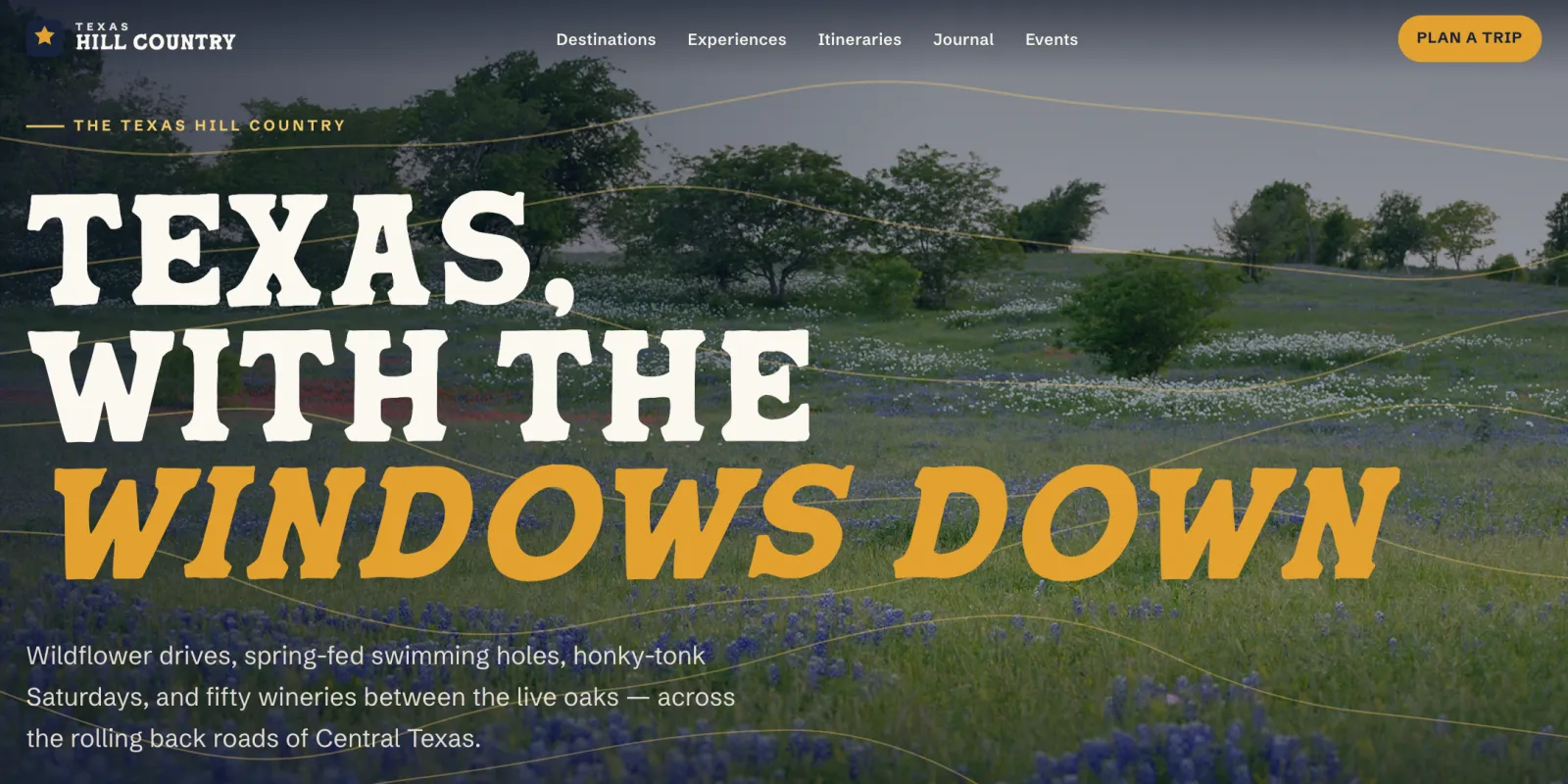
Homepage — the redesigned hero and wordmark
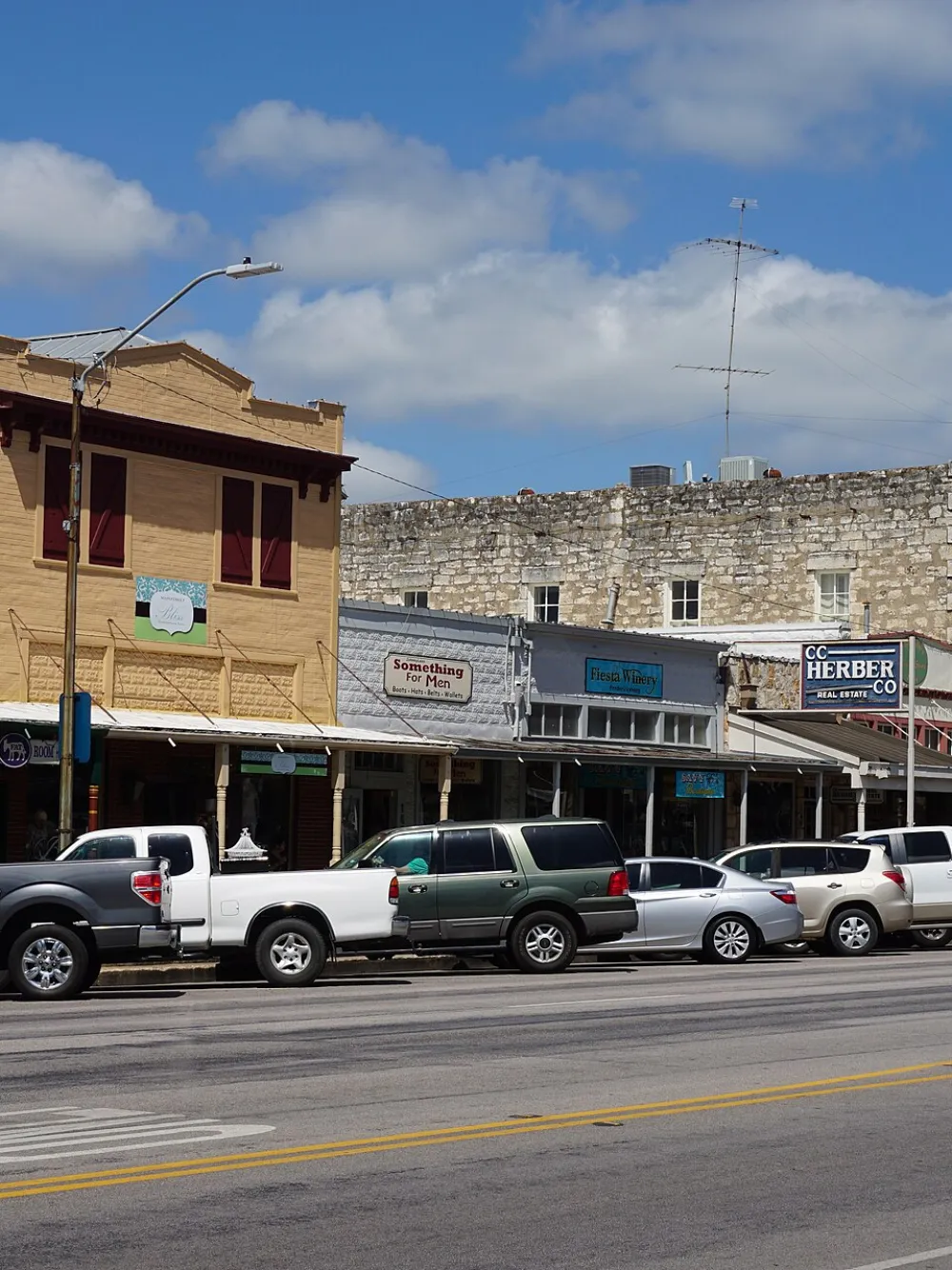
Fredericksburg — German Main Street
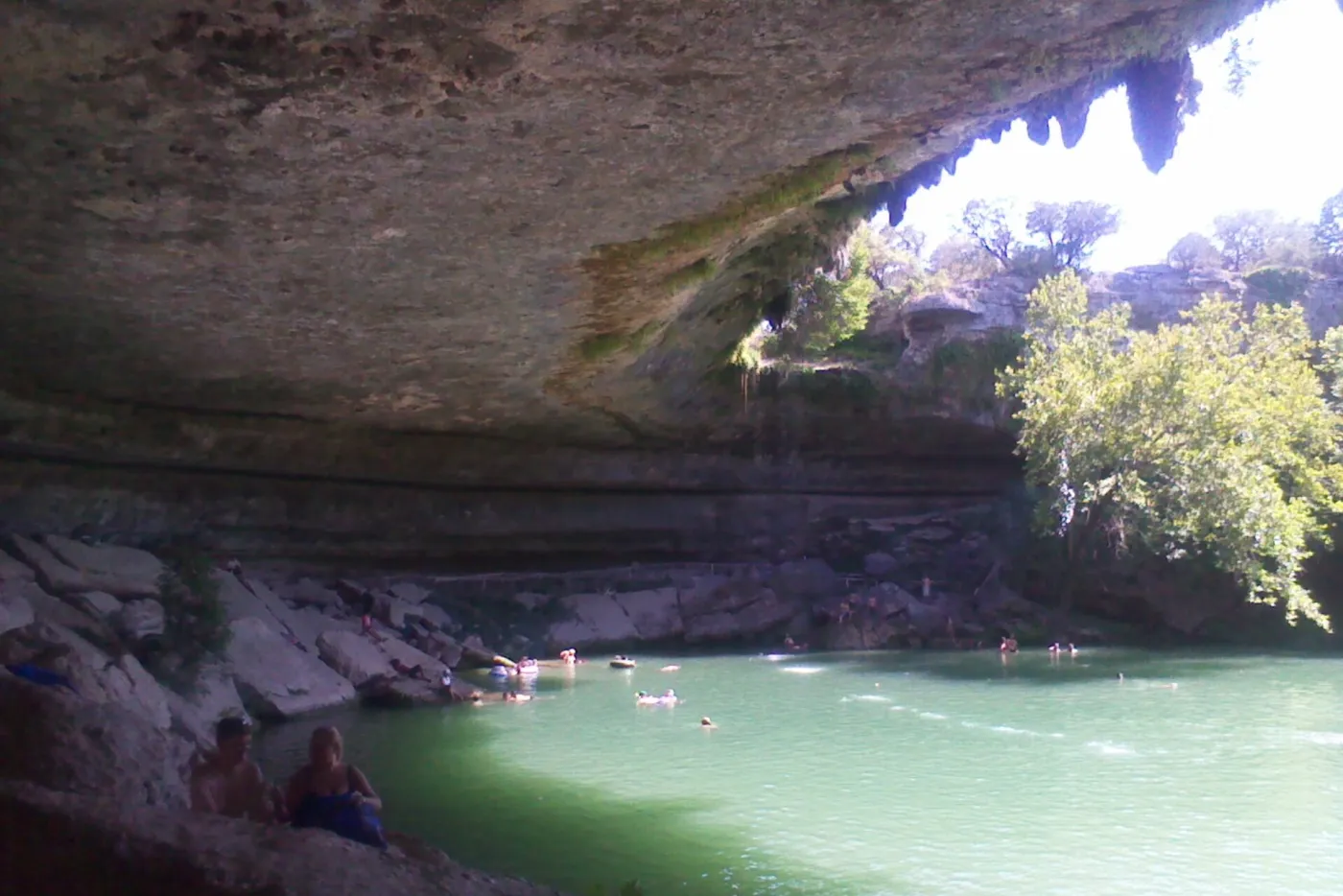
Hamilton Pool — the spring-fed grotto
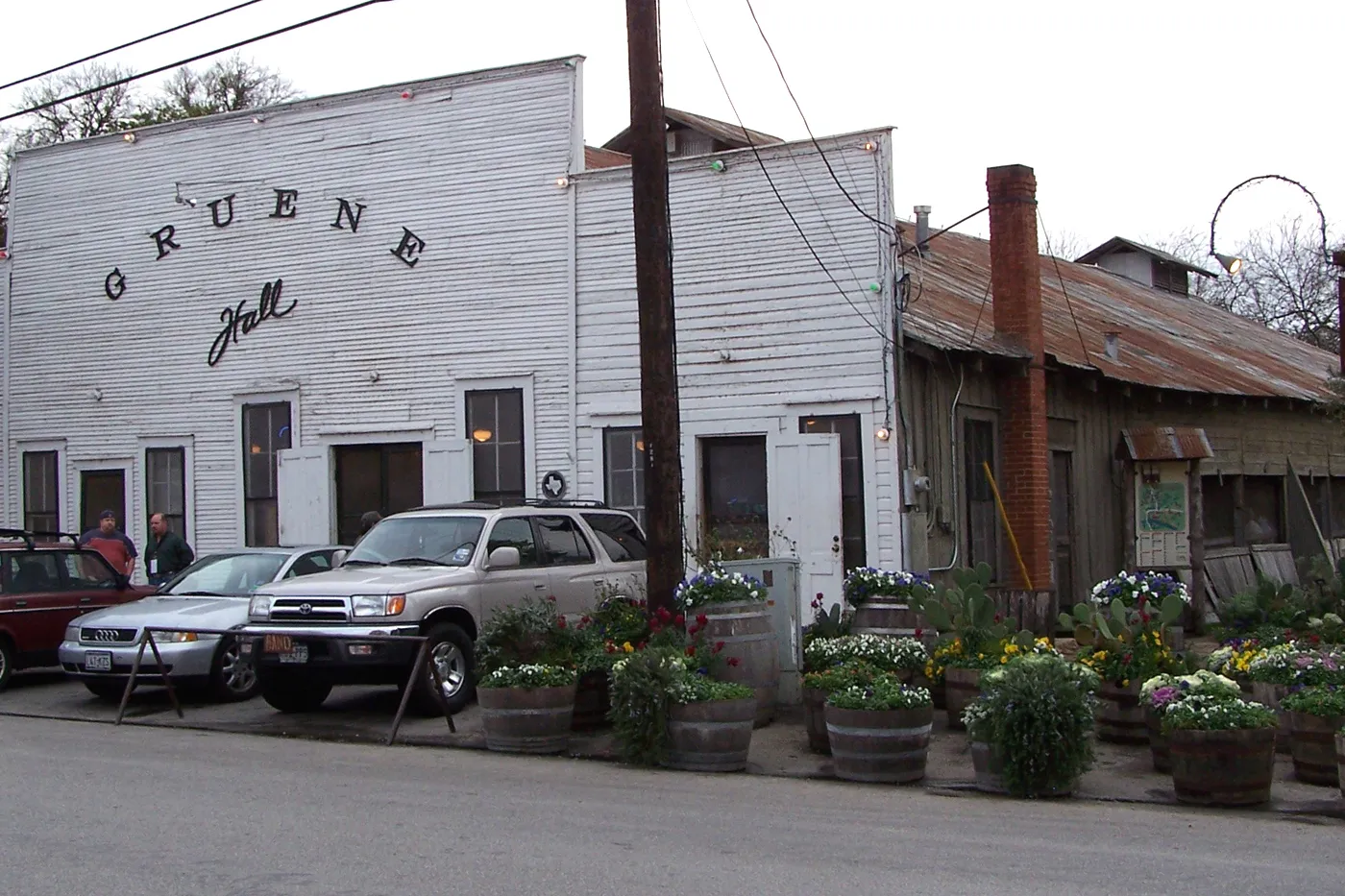
Gruene Hall — dancing since 1878
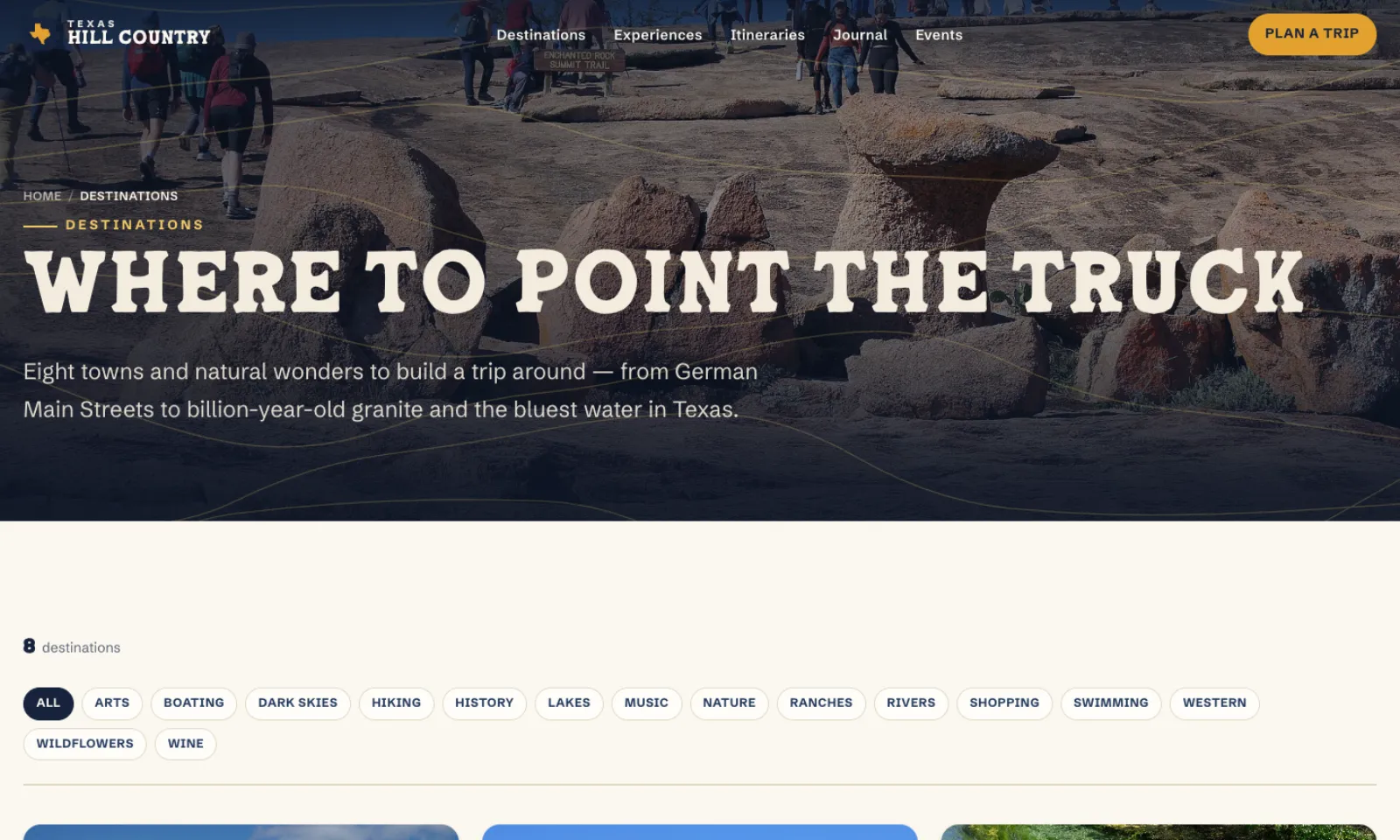
Destinations index — tag filtering, real coordinates on every card
Designed to Be
Kept Current.
A destination site is only as good as the day it was last updated. So the whole platform runs off a typed content model — destinations, experiences, itineraries, events, seasons — rendered through one shared set of branded components.
The journal is a real editorial channel: full articles, Article structured data, category color-coding, and an RSS feed so the stories travel. Itineraries render as day-by-day plans with a schematic route map; events filter by category; seasons re-frame the whole region four times a year.
Because the brand lives in the components — not in any single page — a small team adds a new town, trip, or festival by editing content, never layout. The site scales without ever drifting out of style, and it stays migration-ready for a git-based CMS when the team wants one.
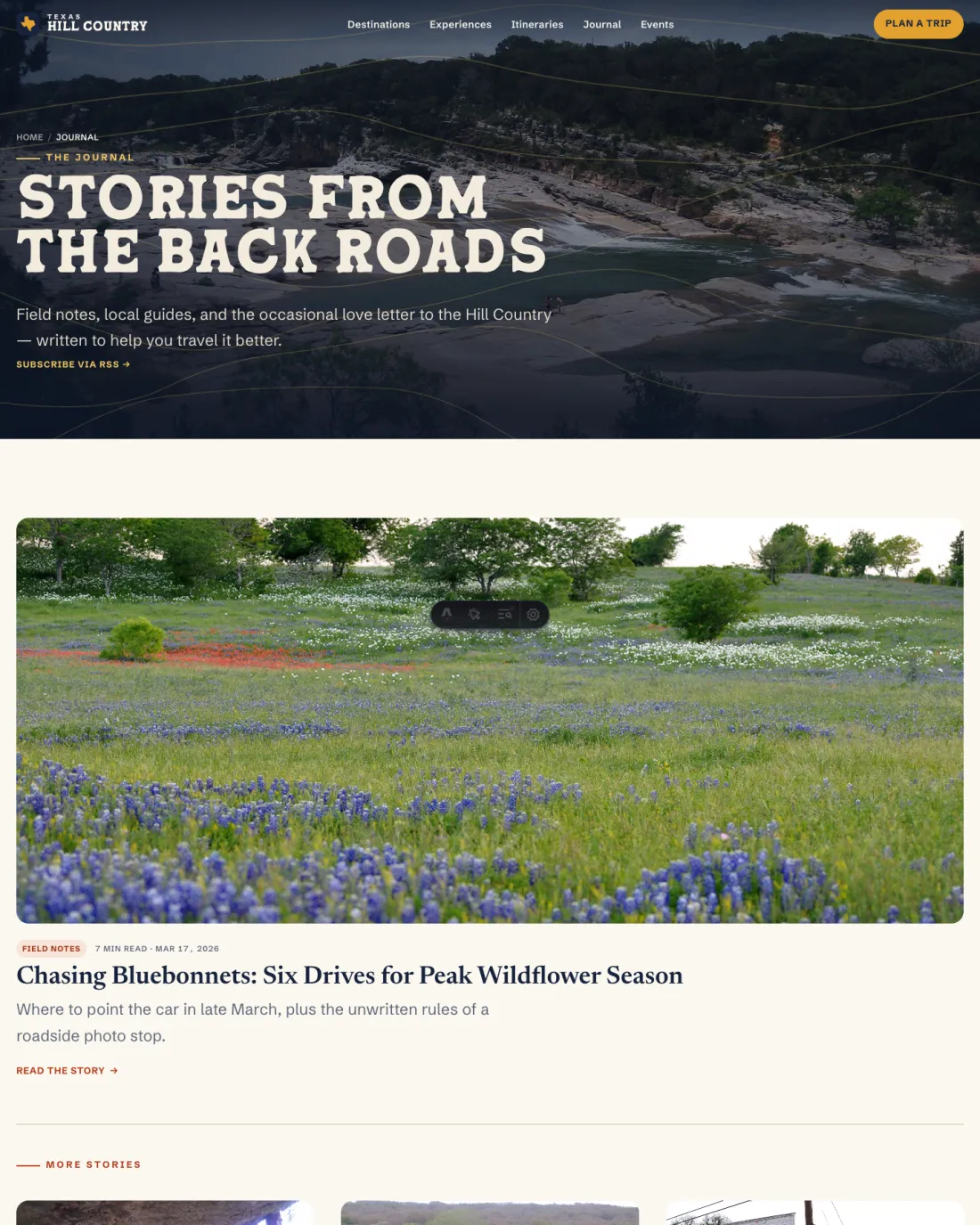
"It finally looks like the Hill Country — not like everywhere else in Texas. And we can keep the whole thing current from the road, between the live oaks."
A Brand That Fits
the Land It Sells.
- A land-derived brand, not a Texas cliché
Palette, type, topographic contours, the destination seal, and coordinate devices all pulled from the real landscape — distinctive enough that the site can't be mistaken for anyone else's.
- 38 pages a small team can run
Destinations, experiences, itineraries, an editorial journal with RSS, an events calendar, and every plan/visitor page — all driven by one content model, published without touching layout.
- AI- and search-ready by construction
Static, near-zero-JS Astro with Schema.org JSON-LD, a generated sitemap, RSS, and an
llms.txt— fast for visitors and legible to the search engines and assistants planning trips. - Accessible and honest about its imagery
WCAG 2.1 AA verified with axe-core (zero violations on the tested page types), with openly-licensed photography credited in full on a dedicated attributions page.
Got a Destination
Worth Its Own Brand?
DMOs, tourism boards, and travel regions — we design destination brands that look like nowhere else and build them on content engines a small team can actually keep current, fast and AI-ready from day one.